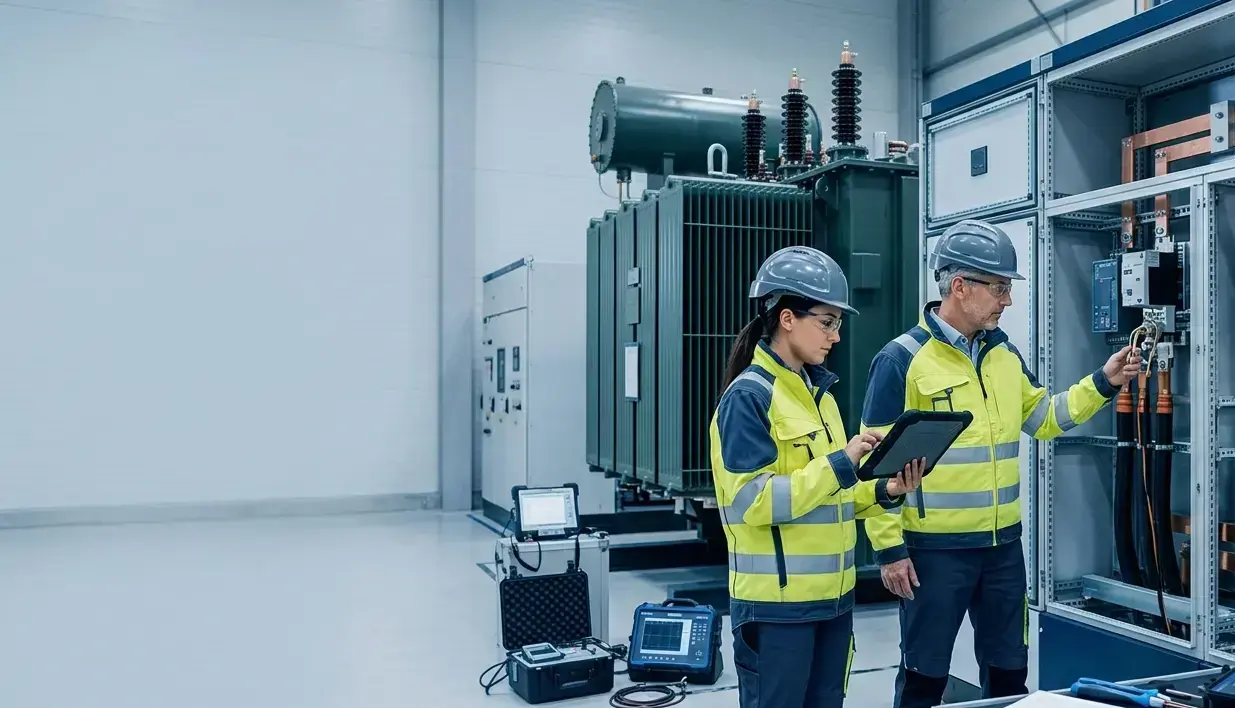
Recruiting Transformer and Switchgear Specialists
Transformer and switchgear manufacturers are expanding capacity while competing for a limited pool of experienced engineering, project and commercial professionals.
By LAK Consulting Group
Executive Summary
Transformers and switchgear form an essential part of electricity networks, industrial power systems and major energy projects. As utilities reinforce networks, renewable generation expands and industrial users electrify more of their operations, manufacturers face sustained demand for equipment that must be engineered, produced and delivered to demanding technical and project requirements.
Capacity expansion depends on more than factories, machinery and supply chains. Companies need electrical design engineers, high-voltage specialists, application engineers, project managers, production leaders, quality professionals, service engineers and technically credible commercial teams. Many of these employees require practical knowledge that develops through years of product, testing and customer exposure.
Competition for experienced specialists can delay growth even where market demand is clear. Manufacturers may secure orders faster than they can add engineering or project capability, while customers expect responsive technical support throughout long delivery cycles. Organisations that connect workforce planning with their product portfolio, production expansion and commercial commitments will be better positioned to increase capacity without weakening quality or customer confidence.
Introduction
Electricity networks are changing in scale and complexity. New generation, storage, industrial loads and charging infrastructure all require reliable connection and protection. Existing networks also need reinforcement, replacement and modernisation. Transformers and switchgear sit at the centre of these developments because they control voltage, isolate faults and enable electrical energy to be distributed safely.
The equipment itself ranges from standardised products to highly engineered systems configured around customer and site requirements. Development and delivery involve electrical, mechanical and thermal design, insulation, protection, controls, testing, quality and project coordination. High-voltage applications add further technical and safety demands.
Manufacturers responding to increased demand need to expand several capabilities simultaneously. Additional production capacity has limited value without enough engineers to release designs, project leaders to manage commitments and service professionals to support the installed base. Recruitment is consequently part of operational and commercial strategy rather than a separate Human Resources activity.
Why Demand Creates a Workforce Challenge
Grid and industrial investment can create substantial order opportunities for equipment suppliers, but delivery capacity cannot be increased immediately. Products require qualified designs, specialised materials, controlled manufacturing processes and extensive testing. The workforce must understand both the technology and the standards applied by customers and markets.
Growth also creates complexity. A manufacturer may add new product variants, enter unfamiliar voltage classes or serve customers in additional countries. Engineering teams need to manage more specifications and approval requirements, while project organisations coordinate a larger number of deliveries with different commercial and technical conditions.
The strongest demand frequently falls on experienced professionals rather than general headcount. A newly recruited engineer can develop into a valuable specialist, but senior employees are still needed to make architecture decisions, review designs, support difficult tests and mentor colleagues. When expansion outpaces this senior capacity, the organisation can become dependent on a small number of experts.
Customer expectations increase at the same time. Utilities, contractors and industrial buyers need credible delivery information and rapid resolution of technical questions. Suppliers that cannot provide this confidence may struggle to convert a strong market position into sustainable relationships.
The Specialist Roles Behind the Equipment
Transformer and switchgear businesses require a broad professional ecosystem. The precise mix varies by product and operating model, but several functions repeatedly influence performance.
- Electrical and electromagnetic design engineers define core product performance and ensure that equipment meets customer and application requirements.
- Mechanical and thermal engineers address structures, enclosures, cooling, forces and environmental conditions.
- Protection, control and automation specialists integrate modern monitoring, communication and operational functionality.
- Application and proposal engineers translate customer specifications into technically viable and commercially sound solutions.
- Test and quality professionals verify performance, investigate non-conformities and maintain disciplined evidence.
- Project managers coordinate engineering, procurement, production, logistics, installation and customer communication.
- Production and operations leaders expand output while protecting safety, quality and delivery.
- Commissioning and service engineers support installation, energisation, maintenance and fault resolution.
- Technical sales and Key Account professionals develop opportunities across complex utility, contractor and industrial buying groups.
These functions are closely connected. A proposal decision can affect design workload and component availability. An engineering change can influence production, testing and delivery. A commissioning issue may reveal information relevant to product development and future quotations. Recruitment plans need to consider these interfaces rather than treating each vacancy independently.
Engineering Experience Takes Time to Build
Transformer and switchgear expertise is highly product and application specific. Formal electrical engineering knowledge provides a foundation, but practical capability develops through design reviews, tests, customer specifications and exposure to equipment in operation. Experienced engineers learn which assumptions require challenge and how apparently minor design choices affect manufacturing or field performance.
High-voltage work places particular emphasis on judgement. Electrical stresses, insulation systems, switching behaviour, thermal performance and fault conditions must be considered together. Specialists need to understand the calculations and simulations, but they also benefit from experience of testing, failure analysis and product history.
This makes senior engineering recruitment competitive. Suitable candidates may work for direct manufacturers, utilities, engineering consultancies, testing organisations or suppliers of related components and systems. Many are not actively searching, particularly when they hold significant technical authority in their current organisation.
Employers can broaden the market by defining the underlying capability they need. An engineer from an adjacent high-voltage product may bring relevant knowledge of insulation, protection or validation, even without experience of the exact equipment family. The transition needs structured product training, but an identical employer background should not be treated as the only evidence of suitability.
Application and Proposal Engineering as a Growth Constraint
Application and proposal engineers connect market demand with the organisation's ability to deliver. They interpret specifications, identify technical risk and coordinate input from design, procurement, production and commercial teams. Their work determines whether an opportunity is configured and priced on a sound basis.
When this capability is overstretched, quotation times increase and engineering questions remain unresolved. Sales teams may pursue opportunities without enough technical qualification, while design teams become involved in repeated presales activity. The result is not simply slower response; it can be weaker margins and greater execution risk after an order is accepted.
Strong application professionals combine technical breadth with commercial awareness. They know when a deviation is manageable, when further clarification is necessary and when a customer request would create disproportionate complexity. They also communicate decisions clearly so that assumptions remain visible throughout the project.
This profile is difficult to recruit because it sits between engineering and sales. Some design engineers prefer deeper technical work, while some commercial professionals lack the product knowledge required for complex specifications. Employers need career paths and recognition that make application engineering an attractive discipline in its own right.
Project Management and Customer Delivery
Transformer and switchgear projects can involve long lead times, custom engineering, specialised components and demanding logistics. Project managers coordinate these dependencies while maintaining communication with customers who are planning wider infrastructure programmes around the promised delivery.
Technical understanding is essential because project decisions cannot be separated from the equipment. Changes to specifications, drawings, testing or site conditions may affect cost and schedule. Project leaders need enough product knowledge to identify consequences and involve the appropriate specialist before commitments are made.
Commercial judgement also matters. Scope changes, contractual milestones and customer acceptance all influence project economics. A project manager who focuses only on internal scheduling may miss risks in documentation, approvals or communication that later affect payment and customer confidence.
Experienced project professionals are relevant to many energy and capital-equipment sectors. Transformer and switchgear manufacturers therefore compete with EPC organisations, utilities, renewable developers and other equipment suppliers. Recruitment should examine evidence of managing technical complexity and customer responsibility rather than relying solely on product titles.
Production Expansion Requires Experienced Leadership
Increasing factory output involves more than adding shifts or equipment. Transformer and switchgear production depends on specialised processes, trained employees, quality control and coordinated material flow. Growth must be achieved without weakening safety, workmanship or traceability.
Operations leaders need to understand where capacity is genuinely constrained. The bottleneck may lie in engineering release, winding, assembly, testing, supplier availability or final documentation rather than the most visible production stage. Strong leaders use evidence to balance resources and avoid moving the constraint from one part of the process to another.
Supervisors, manufacturing engineers and quality professionals are equally important. They turn process requirements into repeatable daily execution and develop newer employees. If leadership expansion focuses only on senior management, the organisation may lack the technical supervision required on the factory floor.
Recruiting from adjacent electrical or capital-equipment manufacturing can provide transferable operational capability. Candidates still need to understand product-specific quality and safety requirements, but experience of low-volume complexity, engineered-to-order products and rigorous testing can be highly relevant.
Testing, Quality and Technical Evidence
Customers rely on manufacturers to demonstrate that equipment meets agreed requirements. Testing and quality teams provide this evidence, investigate deviations and support continuous improvement. Their work influences product release, customer acceptance and the organisation's reputation.
Experienced test engineers combine procedural discipline with diagnostic ability. When results differ from expectations, they need to identify whether the cause lies in the product, test arrangement, instrumentation or underlying assumption. This judgement becomes especially important where test capacity is limited and project schedules depend on successful completion.
Quality professionals in transformer and switchgear environments also work across design, suppliers and production. They need to distinguish isolated non-conformities from systemic weaknesses and ensure that corrective action addresses root causes. Supplier-quality capability can be critical where specialised components have long replacement times.
These roles may receive less recruitment attention than design or sales, but shortages can constrain every delivery. Workforce planning should consider the complete path from customer requirement to released and documented equipment.
Service and Lifecycle Capability
Transformers and switchgear operate over long lifecycles and become critical assets within customer networks or facilities. Service professionals support installation, commissioning, maintenance, upgrades and fault response. They need to work safely around high-energy equipment and communicate clearly when customers are under operational pressure.
The market for experienced field engineers is limited because the role combines product knowledge, independent judgement and travel. Candidates may also be attracted to utilities, industrial operators or service organisations offering different working patterns. Manufacturers need a realistic approach to regional coverage, scheduling and career progression.
Digital monitoring and remote support can improve diagnostics, but they do not remove the need for field expertise. Data requires interpretation, and many interventions depend on physical inspection or testing. Senior specialists can support regional teams remotely when escalation processes and documentation are strong.
Service capability contributes to future revenue as well as customer retention. Engineers identify asset condition, upgrade needs and recurring application issues. Manufacturers that connect field insight with product and commercial teams can strengthen lifecycle offerings and improve future equipment.
Technical Sales in Utility and Industrial Markets
Transformer and switchgear sales professionals operate within complex buying groups. Utilities, engineering contractors, consultants, distributors and industrial users may all influence specifications and supplier selection. Opportunities can develop over extended periods and require coordination across technical and commercial stakeholders.
Sales Engineers and Key Account Managers need enough technical understanding to identify the application, qualify the opportunity and involve specialists appropriately. They should understand how specifications, testing, delivery and service affect value. Product knowledge alone is not sufficient if the person cannot build account strategy or maintain commercial discipline.
Experienced candidates may bring relationships, but employers should examine how those relationships were developed and whether they transfer to the new offer. A customer familiar with an individual will still evaluate the manufacturer's technology, capacity and support. Sustainable performance comes from connecting access with a credible organisational proposition.
The broader challenge of recruiting technically credible commercial professionals is explored in Recruiting Sales Engineers in Energy Infrastructure. Transformer and switchgear businesses should define how sales, application engineering and project teams will share responsibility before adding headcount.
Recruiting From Adjacent Markets
Exact product experience is important for some technical authorities, but applying it to every vacancy can make growth impossible. Adjacent markets can provide candidates with relevant high-voltage, power-system, capital-equipment, manufacturing or project capability.
Assessment should focus on the engineering and commercial problems the candidate has solved. Has an engineer designed equipment under comparable electrical or thermal constraints? Has a project manager coordinated long-lead components and customer approvals? Has an operations leader scaled complex production without losing quality control?
The answer should inform a structured onboarding plan. Candidates moving between products may need time with design standards, factory processes, customer specifications and field applications. Assigning an experienced mentor and defining early technical boundaries allows the organisation to benefit from transferable capability without underestimating product risk.
International recruitment can further broaden the market where expertise is concentrated in particular manufacturing regions. Relocation and language expectations need to be clear, and employers should recognise that candidates may compare opportunities across countries as well as companies.
Retaining Critical Knowledge
Recruitment cannot solve the talent shortage if experienced employees leave faster than capability is developed. Transformer and switchgear organisations often depend on specialists whose knowledge spans product history, customer requirements and unusual technical cases. Replacing that knowledge after departure is difficult.
Technical career paths help retain professionals who want greater influence without moving into general management. Principal Engineer, technical authority and specialist leadership roles can recognise contribution while preserving direct involvement in engineering decisions.
Mentoring and documentation are equally important. Senior specialists need time to review work and develop colleagues, not only resolve urgent problems. Design rationale, test learning and field experience should be captured systematically so that capability becomes organisational rather than personal.
Workload and leadership behaviour affect retention. Persistent pressure caused by unrealistic order commitments can make experienced employees receptive to competitors. Commercial growth plans should therefore account for the capacity of the technical teams expected to deliver them.
Workforce Planning for Capacity Growth
Manufacturers should connect hiring plans with the product and order portfolio. Forecasting only total headcount can miss where experience is required. A factory may recruit production employees while lacking enough engineers, supervisors or test specialists to release and complete the additional work.
Capability mapping can identify roles that influence several stages or projects. These positions deserve early attention because vacancies have a multiplier effect. Succession should also be assessed where one individual holds approval authority or unique customer knowledge.
The plan should distinguish immediate external recruitment from internal development. Senior technical, project or leadership gaps may require direct search, while graduate and apprenticeship pipelines build future depth. Both are necessary, but they operate on different timelines.
Market intelligence supports realistic decisions. It can show where candidates are located, which adjacent employers develop relevant skills and what working conditions influence mobility. LAK Consulting Group's talent mapping and market intelligence service helps leadership teams evaluate these questions before expansion assumptions become fixed.
Executive Perspective
Transformer and switchgear manufacturers occupy a critical position within energy infrastructure. Demand for reliable equipment is linked to network modernisation, renewable integration, industrial electrification and the replacement of ageing assets. The opportunity is substantial, but execution depends on technical and organisational capability.
Executives should evaluate whether commercial ambition is matched by engineering, project, testing and service capacity. Accepting more work without addressing these dependencies can increase backlog while weakening predictability and customer experience. Workforce investment should be considered alongside factory and supply-chain investment.
The wider Grid Modernisation talent gap means manufacturers compete for specialists with utilities, consultancies and technology providers. A credible employer proposition should therefore explain the technical significance of the work, the investment behind growth and the authority attached to the role.
Leadership appointments deserve particular attention where companies are expanding capacity, entering new voltage classes or building international operations. These transitions require leaders who can balance technical standards, delivery, people and commercial priorities rather than optimise one area in isolation.
Conclusion
Transformers and switchgear enable the safe and reliable operation of modern electricity systems. Manufacturers responding to increased demand need more than physical capacity. They require experienced people across design, application engineering, project management, production, testing, service and commercial functions.
The most difficult roles combine specialist product knowledge with responsibility across functions or customers. Employers can improve recruitment by defining essential capability precisely, considering adjacent markets and planning onboarding around genuine knowledge gaps. Development, succession and retention must support external hiring so that growth does not increase dependency on a few individuals.
Companies that align workforce planning with capacity and commercial strategy will be better positioned to deliver reliably and build lasting customer relationships. Organisations planning specialist or leadership recruitment can contact LAK Consulting Group to discuss the relevant transformer, switchgear and wider energy-infrastructure talent market.
Frequently Asked Questions
Which transformer and switchgear roles are most difficult to recruit?
Pressure is often strongest in senior electrical design, high-voltage engineering, application engineering, project management, testing, service and technically credible commercial roles.
Must candidates have experience with the exact product type?
Exact experience may be essential for some technical-authority positions, but professionals from adjacent high-voltage, electrical equipment and complex capital-project markets can bring relevant capability with structured onboarding.
Why is application engineering important to growth?
Application Engineers translate customer specifications into feasible and commercially sound solutions. Limited capacity can delay quotations, weaken qualification and create avoidable project risk after an order is accepted.
How can manufacturers retain specialist knowledge?
Technical career paths, mentoring, disciplined documentation, sustainable workloads and early succession planning help convert individual expertise into lasting organisational capability.
How should workforce planning support factory expansion?
Hiring plans should identify engineering, supervision, testing, quality, project and service constraints alongside production headcount. Capacity increases only when the complete delivery system can support additional work.
Discuss Your Recruitment Strategy
Every organisation faces different commercial, technical and leadership challenges. If you are planning to strengthen your team, expand into new markets or recruit for a business-critical position, we would be pleased to discuss your objectives and share our perspective on the market.
Book a Consultation