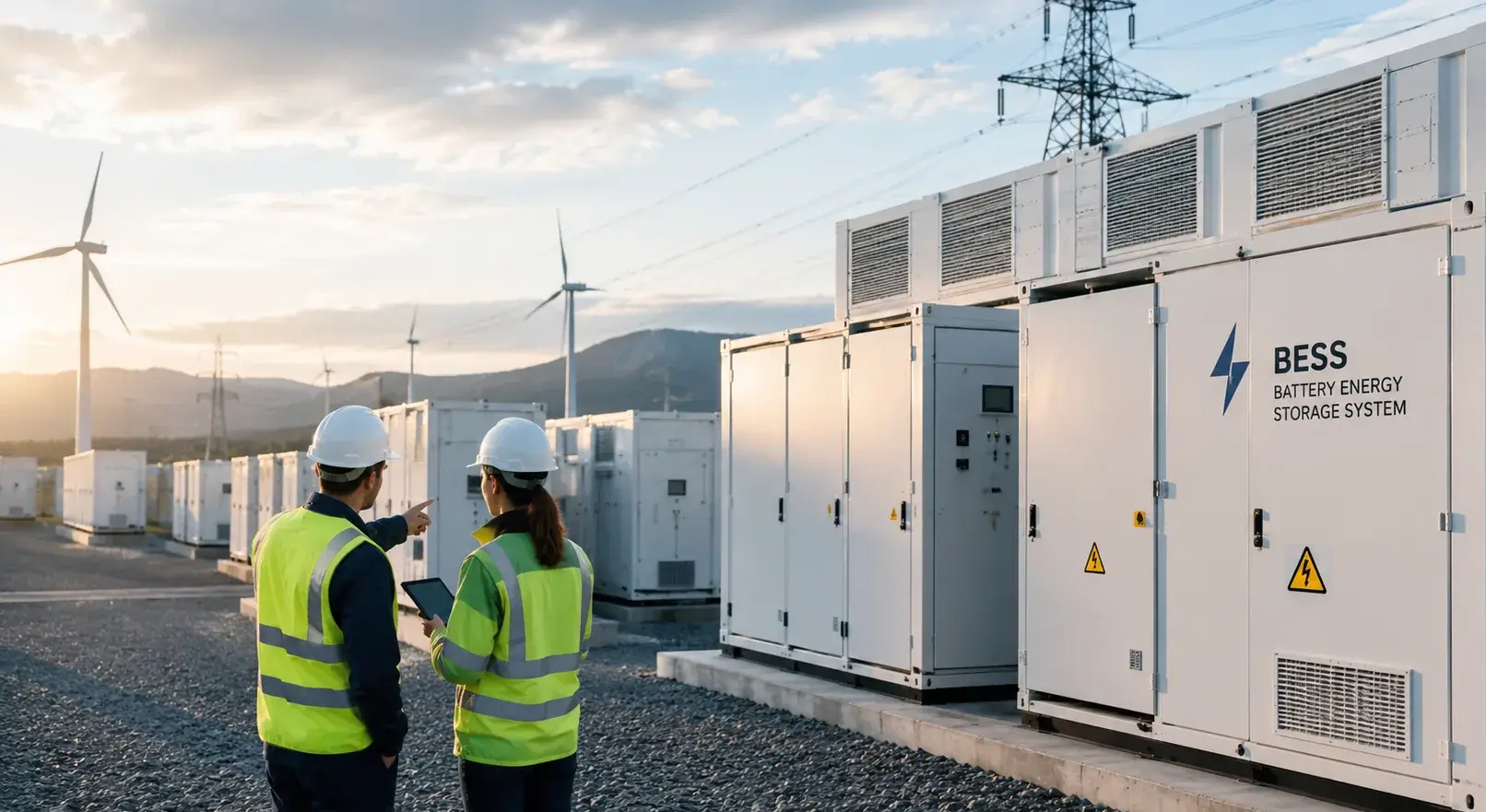
Why Battery Energy Storage Is Creating a New Talent Shortage
Global investment in Battery Energy Storage Systems is accelerating rapidly, but the shortage of experienced commercial, engineering and project professionals threatens to become one of the sector's greatest constraints.
By LAK Consulting Group
Executive Summary
Battery Energy Storage Systems (BESS) have moved from a niche technology to a central component of modern electricity infrastructure. As renewable generation continues to expand, utilities, independent power producers and industrial energy users increasingly rely on large-scale battery storage to improve grid stability, enhance flexibility and strengthen energy security.
Global investment reflects this transformation. Governments are introducing supportive policies, transmission operators are integrating storage into network planning and private investors continue to finance increasingly ambitious projects. For manufacturers, developers, engineering companies and technology suppliers, the commercial opportunities have rarely been greater. Yet behind this rapid expansion lies a challenge that receives considerably less attention than technology or capital investment: the availability of experienced professionals capable of designing, delivering and commercialising Battery Energy Storage projects.
The shortage extends far beyond electrical engineers. Organisations increasingly compete for Sales Engineers, Application Engineers, Project Managers, Grid Specialists, Power Systems Engineers, Procurement professionals and executive leaders who understand both the technical and commercial complexities of energy storage. As demand accelerates, access to talent is becoming one of the defining competitive advantages within the global Battery Energy Storage industry.
Introduction
Only a decade ago, Battery Energy Storage was often viewed as an emerging technology with promising long-term potential. Today, it has become an essential component of modern electricity systems. Across Europe, North America, Asia-Pacific and the Middle East, large-scale battery installations are supporting renewable integration, improving grid resilience and enabling more flexible electricity markets. Utilities increasingly regard energy storage as a strategic asset, while industrial companies use batteries to reduce energy costs, improve operational resilience and support decarbonisation objectives.
This rapid transformation has fundamentally altered the commercial landscape. Manufacturers continue to invest in production capacity, project developers are expanding internationally and engineering consultancies are strengthening their specialist capabilities. At every stage of the value chain, organisations require professionals capable of translating technological innovation into commercially successful projects.
Why Battery Energy Storage Has Become a Strategic Industry
Battery Energy Storage is no longer considered a complementary technology supporting renewable energy. It is increasingly recognised as critical infrastructure. Modern electricity systems require far greater flexibility than traditional power networks. Renewable generation is inherently variable, electricity demand fluctuates continuously and grid operators must maintain stability while integrating growing volumes of decentralised generation.
Battery storage addresses many of these challenges simultaneously. It enables frequency regulation, peak shaving, load balancing, renewable integration, backup power and participation in increasingly sophisticated electricity markets. For investors, the sector represents an attractive long-term growth opportunity. For governments, it supports energy security and climate objectives. For technology manufacturers, it creates sustained demand for increasingly advanced hardware, software and engineering solutions. The result is a market that continues to expand at remarkable speed.
Growth Creates New Recruitment Challenges
Rapid market expansion almost always creates pressure on the labour market. The Battery Energy Storage sector provides a clear example. Many organisations entering the market require professionals with highly specialised technical knowledge. However, because the industry itself remains relatively young, the number of experienced professionals remains limited.
Unlike mature sectors, there is no large generation of engineers or commercial specialists with decades of Battery Energy Storage experience. Many of today's experts have transitioned from adjacent industries including power generation, electrical engineering, renewable energy, industrial automation or transmission and distribution. Consequently, organisations often compete for the same relatively small group of experienced professionals. The shortage becomes particularly visible during periods of accelerated investment, when multiple organisations simultaneously expand their engineering, project management and commercial teams.
Beyond Engineers: The Hidden Talent Shortage
Public discussion often focuses on engineering shortages. In practice, Battery Energy Storage projects require a far broader range of expertise.
- Commercial teams must understand increasingly complex customer requirements while navigating rapidly evolving regulatory frameworks.
- Application Engineers translate technical capabilities into commercially viable customer solutions.
- Project Managers coordinate multidisciplinary teams responsible for design, procurement, installation and commissioning.
- Power Systems Engineers ensure safe integration into existing electricity networks.
- Procurement professionals secure critical components within increasingly competitive global supply chains.
- Executive leadership teams must simultaneously manage rapid organisational growth while maintaining technical excellence and commercial discipline.
Each of these roles contributes directly to successful project delivery, yet all are becoming progressively more difficult to recruit.
Why Experience Matters More Than Ever
As Battery Energy Storage projects increase in scale and complexity, organisations increasingly value practical experience alongside academic qualifications. Technical knowledge remains essential, but successful project delivery frequently depends upon understanding customer expectations, regulatory requirements, commercial risk and multidisciplinary collaboration. Professionals who have already delivered large-scale storage projects possess insights that cannot easily be acquired through training alone. They understand commissioning challenges, permitting requirements, supplier coordination and stakeholder management. Equally importantly, they recognise how technical decisions influence commercial outcomes throughout the project lifecycle. For employers, these individuals represent an increasingly valuable competitive asset.
Why Companies Continue to Compete for the Same Professionals
Recruitment challenges within the Battery Energy Storage sector are not simply the consequence of strong market growth. They also reflect the relatively small number of professionals who possess both the technical expertise and practical project experience that employers increasingly require. Unlike more mature industries, Battery Energy Storage has only recently entered a period of large-scale commercial deployment. As a result, organisations cannot recruit from a workforce that has accumulated decades of specialist experience. Many of today's leading professionals originally built their careers in adjacent sectors such as power transmission, renewable energy, industrial automation, electrical engineering or utility operations before transitioning into energy storage.
This creates an unusual recruitment dynamic. Companies are often targeting exactly the same individuals, many of whom are already employed by competitors and are not actively considering a career move. Traditional recruitment methods therefore produce only a small proportion of the available talent pool. For organisations seeking to expand rapidly, identifying and engaging passive candidates has become significantly more important than simply advertising vacancies.
The Commercial Cost of Talent Shortages
The consequences of talent shortages extend well beyond Human Resources. Battery Energy Storage projects frequently involve substantial capital investment, complex stakeholder environments and demanding project schedules. Delays in recruiting key professionals can therefore have direct commercial consequences that affect revenue, customer satisfaction and long-term growth.
An experienced Project Manager may oversee several large installations simultaneously. An Application Engineer often supports multiple strategic opportunities before contracts are awarded. Sales Engineers help customers evaluate technical solutions that influence purchasing decisions worth millions of euros, while Grid Integration Specialists ensure that projects satisfy increasingly demanding regulatory and technical requirements.
When these positions remain vacant, project timelines become more difficult to maintain, existing teams experience increasing workloads and customer responsiveness may decline. Over time, recruitment delays begin to influence commercial performance rather than simply organisational capacity. For executive leadership, the discussion should therefore focus not only on recruitment expenditure, but on the financial impact of postponed hiring.
What Leading Organisations Do Differently
Despite increasing competition for experienced professionals, some organisations consistently achieve stronger recruitment outcomes than others. One important difference is that they recognise recruitment as a continuous strategic activity rather than an occasional response to vacancies. Instead of beginning the search after a position becomes available, they maintain long-term relationships with professionals across the industry, monitor market developments and continuously strengthen their employer reputation.
They also understand that experienced candidates evaluate opportunities differently from early-career professionals. Compensation remains important, but it is rarely the only deciding factor. Senior professionals increasingly consider questions such as:
- Does the organisation have a clear long-term strategy?
- Is Battery Energy Storage a genuine strategic priority?
- Will I work on technically challenging projects?
- Does leadership invest in innovation and professional development?
- Can I influence the future direction of the business?
Organisations capable of answering these questions convincingly are often better positioned to attract experienced professionals, even within highly competitive labour markets.
Recruitment as a Competitive Advantage
As the Battery Energy Storage market continues to mature, technology alone is unlikely to differentiate organisations over the long term. Experienced people are considerably more difficult to replicate. Engineers who have delivered complex grid-connected storage projects, commercial leaders who understand international energy markets and project professionals capable of coordinating multidisciplinary teams represent capabilities that competitors cannot easily acquire overnight.
Recruitment therefore becomes more than an operational necessity. It becomes part of corporate strategy. Organisations that consistently identify, attract and retain exceptional professionals will generally execute projects more effectively, respond more rapidly to changing market conditions and strengthen customer relationships over many years.
Executive Perspective
Battery Energy Storage is expected to remain one of the fastest-growing segments of the global energy infrastructure market throughout the coming decade. Investment continues to accelerate, new applications continue to emerge and governments increasingly recognise storage as a critical component of resilient electricity systems. Securing manufacturing capacity, developing innovative products and entering new markets remain essential priorities. Equally important, however, is building the workforce capable of delivering those ambitions. Many organisations will invest in technology, but fewer will invest with equal determination in the people who transform technology into commercial success. Increasingly, that distinction may determine which organisations emerge as long-term market leaders.
Conclusion
Battery Energy Storage is reshaping the global energy landscape. As electricity systems become more flexible, decentralised and digitally connected, demand for storage technologies will continue to increase across utilities, industrial companies and renewable energy developers alike. Yet the industry's greatest constraint may not be technology or capital. It may be people. Engineers, Sales Engineers, Project Managers, Application Specialists and commercial leaders with relevant Battery Energy Storage experience remain in exceptionally short supply.
Companies that recognise this reality early - and develop a long-term strategy for attracting, retaining and developing exceptional talent - will be better positioned to capitalise on one of the most significant infrastructure investment opportunities of the coming decades. Technology will continue to evolve rapidly. The organisations that secure the people capable of applying that technology effectively will define the future of the Battery Energy Storage industry.
For further context, see our related insights on why industrial technology companies struggle to hire the talent that drives growth and recruiting Sales Engineers in energy infrastructure. Organisations planning future hiring can also review our services or contact LAK Consulting Group to discuss market conditions.
Frequently Asked Questions
Why is recruitment particularly difficult within Battery Energy Storage?
The sector has expanded much faster than the available talent pool. Many experienced professionals have transitioned from related industries, while relatively few possess extensive Battery Energy Storage project experience.
Which roles are currently most difficult to recruit?
Sales Engineers, Application Engineers, Project Managers, Power Systems Engineers, Grid Integration Specialists, Procurement professionals and experienced commercial leaders.
Why are traditional recruitment methods often insufficient?
Many of the strongest candidates are already employed and are not actively searching for new opportunities.
How can organisations strengthen their recruitment strategy?
Build long-term talent pipelines, communicate a compelling strategic vision and view recruitment as an integral part of business growth.
Why is Battery Energy Storage expected to remain an attractive employment market?
Global investment in renewable energy, electricity grid modernisation and energy security continues to drive demand for storage technologies.
Discuss Your Recruitment Strategy
Every organisation faces different commercial, technical and leadership challenges. If you are planning to strengthen your team, expand into new markets or recruit for a business-critical position, we would be pleased to discuss your objectives and share our perspective on the market.
Book a Consultation